
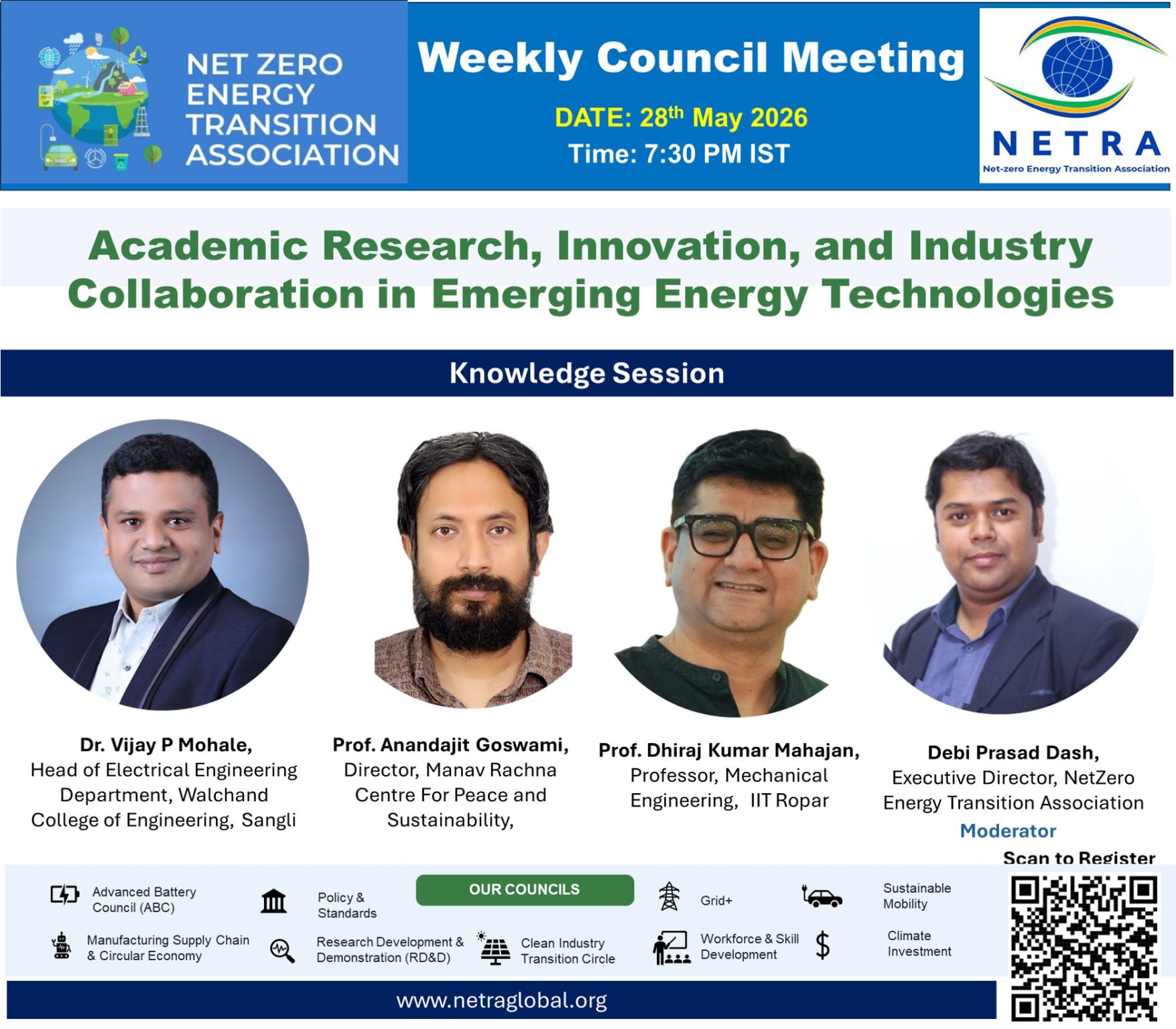
The NETRA Council Meeting brought together academicians, researchers, and industry leaders to discuss strengthening the linkages across sectors in the energy field. This session highlighted how research outputs could better align with practical needs among stakeholders and accelerate real-world impact.
Additionally, the discussion underscored the growing importance of aligning academic outputs, such as student research papers, theses, and innovation projects, with industry challenges. This alignment supports Clean energy, Academic-Industry Collaboration across sectors. Such alignment fosters faster application, better funding choices, and stronger partnerships between universities and companies.
A central theme emerged: the need to create structured platforms where students and researchers can directly engage with industry experts. Additionally, collaboration can enhance the relevance and impact of academic work while giving industry access to fresh perspectives and talent.
Key insights and collaborative models in energy sectors
Bridging theory and practice, industry feedback informs academic research processes. Additionally, creating mentorship and review mechanisms where industry experts guide students on real-time challenges. Moreover, encouraging collaborative research models involving universities, startups, and established energy companies to accelerate innovation. Enhancing opportunities for pilot projects and field-testing of academic innovations within industry settings supports Clean energy, Academic-Industry Collaboration. Furthermore, building ecosystems that support knowledge exchange, internships, and co-creation to nurture future-ready professionals in the energy sector. Finally, recognizing the role of interdisciplinary research in addressing complex energy challenges, including sustainability, scalability, and affordability.
The discussion highlighted that fostering strong academia–industry partnerships is critical for driving innovation, improving the quality of research, and ensuring that emerging energy technologies are both impact and salable. By aligning academic efforts with industry needs, the sector can accelerate its transition toward a more sustainable and innovation-driven future.