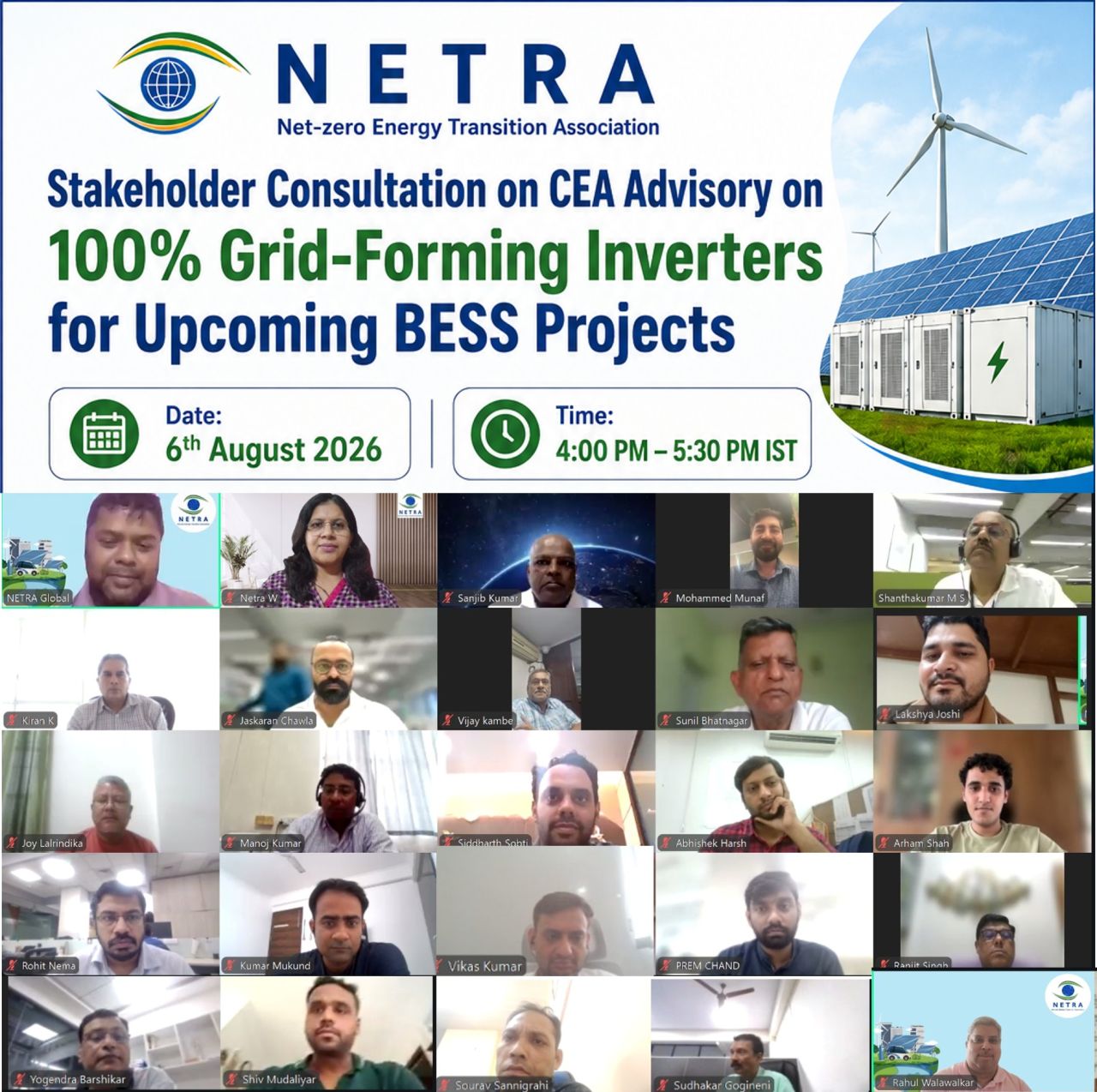

Date: 6 August 2026
However, NETRA convened a stakeholder consultation on 6 August 2026 to discuss the CEA advisory. It covered Grid Modernization and the CEA advisory for deploying 100% grid-forming inverters in upcoming BESS projects.
The consultation examined the technical, commercial, and regulatory implications of Grid Modernization.
Moreover, it explored grid-forming inverter technology across India’s expanding energy storage ecosystem.
With the increasing integration of inverter-based renewables, Grid Modernization for grid stability. Additionally, it strengthens power system resilience and supports reliable electricity operations.
The session provided a platform for industry stakeholders to examine implementation challenges, evaluate project-level implications, and identify practical pathways for transitioning towards grid-forming BESS infrastructure.
Industry Background and Policy Context
India’s accelerating deployment of solar, wind, and battery energy storage technologies is transforming the operational dynamics of the electricity grid.
As conventional synchronous generation is increasingly complemented by inverter-based resources, maintaining system strength, frequency stability, voltage regulation, and grid reliability becomes more complex.
Unlike conventional grid-following inverters, which synchronize with an existing grid voltage and frequency reference, grid-forming inverters can establish and regulate voltage and frequency, offering additional capabilities to support power system stability.
Recognizing the growing importance of these capabilities, the Central Electricity Authority (CEA) issued an advisory.
Moreover, it recommends Grid Modernization through 100% grid-forming inverter deployment in upcoming BESS projects.
However, the transition raises important considerations for Grid Modernization. These include technology readiness, equipment specifications, procurement practices, system integration, project economics, and regulatory alignment.
Key Discussion Areas of Grid Modernization
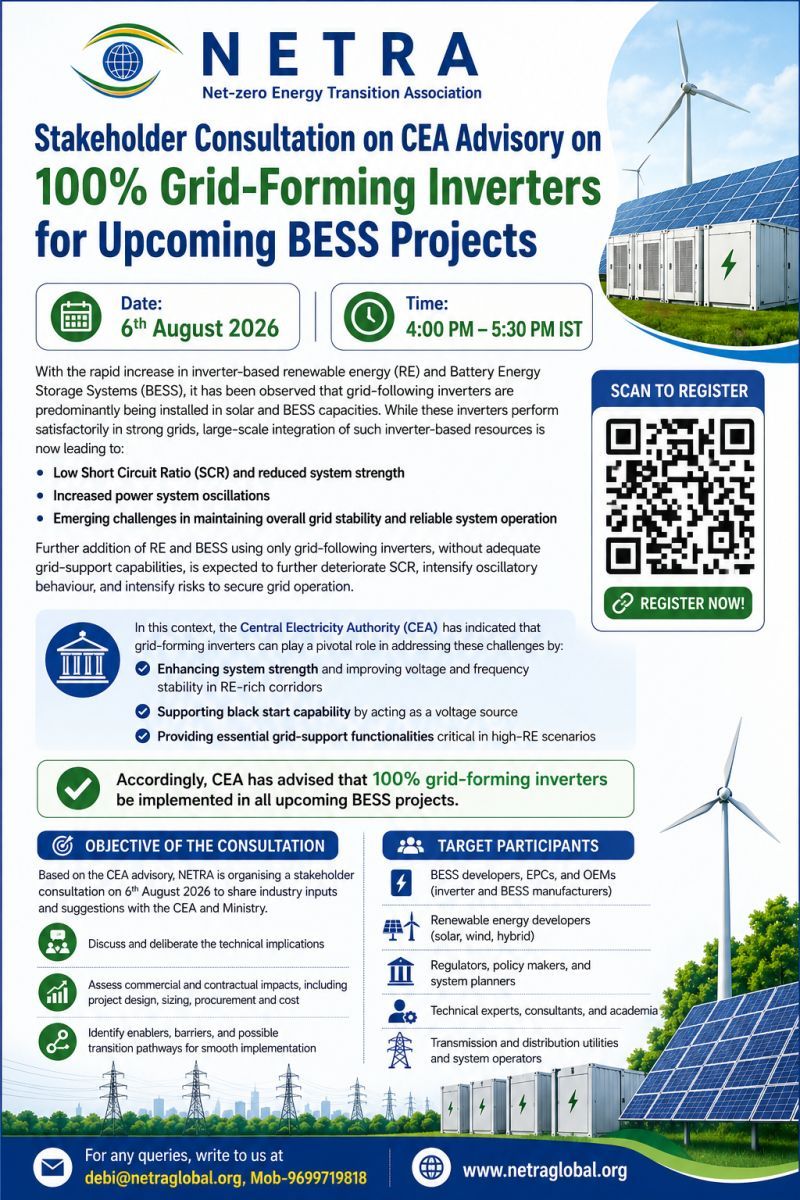
The stakeholder consultation focused on four critical aspects of implementing the CEA advisory:
- Technical Implications and Grid Stability: Examining the role of grid-forming inverters in improving system strength, voltage and frequency regulation, and overall grid resilience. Discussions also considered technical performance requirements and integration challenges.
- Commercial and Contractual Implications: Assessing the impact of grid-forming requirements on BESS project design, system sizing, procurement specifications, equipment costs, and contractual obligations.
- Technology Readiness and Implementation Challenges: Identifying technological, operational, and market barriers that could affect the adoption of grid-forming inverters, including equipment availability, testing requirements, interoperability, and standardization.
- Transition Pathways and Policy Alignment: Exploring practical implementation strategies, industry readiness, and the regulatory and institutional support required for a smooth transition towards grid-forming BESS deployment.
Stakeholder Participation
The consultation was intended to bring together representatives from across the power and energy storage ecosystem, including:
- Battery Energy Storage System (BESS) developers
- Engineering, Procurement and Construction (EPC) companies
- Original Equipment Manufacturers (OEMs) and technology providers
- Renewable energy project developers
- Regulators and policymakers
- Power utilities and system operators
- Technical experts and energy consultants
- Academic and research institutions
The cross-sector engagement was designed to encourage a comprehensive assessment of technical feasibility, commercial implications, and industry preparedness.
Consultation Objective
The primary objective of the consultation was to facilitate informed industry dialogue on the CEA advisory and evaluate the practical implications of transitioning to 100% grid-forming inverters in upcoming BESS projects.
The discussion sought to identify implementation barriers, assess commercial and technical readiness, and explore measures that could support cost-effective and reliable deployment.
It also aimed to gather stakeholder perspectives to inform industry recommendations and contribute to ongoing regulatory and policy discussions concerning India’s energy storage infrastructure.
Significance for India’s Energy Storage Ecosystem
As India moves toward higher renewable energy penetration, Grid Modernization will rely on grid-forming technology. Moreover, it will help maintain power system stability and enable greater integration of inverter-based resources.
The transition towards grid-forming BESS presents opportunities to strengthen grid resilience, enhance operational flexibility, and support the long-term reliability of India’s electricity network.
However, successful implementation requires coordinated efforts across technology providers, project developers, utilities, regulators, and policymakers. Additionally, these actions address technical standards, commercial viability, and system-level integration to advance Grid Modernization.
Through this stakeholder consultation, NETRA continued its efforts to facilitate industry–government engagement, promote technology readiness, and support evidence-based policy development for India’s evolving power and energy storage sector.
Key Focus Areas: Grid-Forming Inverters | Battery Energy Storage Systems (BESS) | CEA Advisory | Grid Stability | Renewable Energy Integration | Power System Reliability | Energy Storage Policy | Grid Modernization